
WEEK 04
February 27, 2026 - March 5, 2026
Jade Seal: Process and Reconstruct again…
03/02/26:
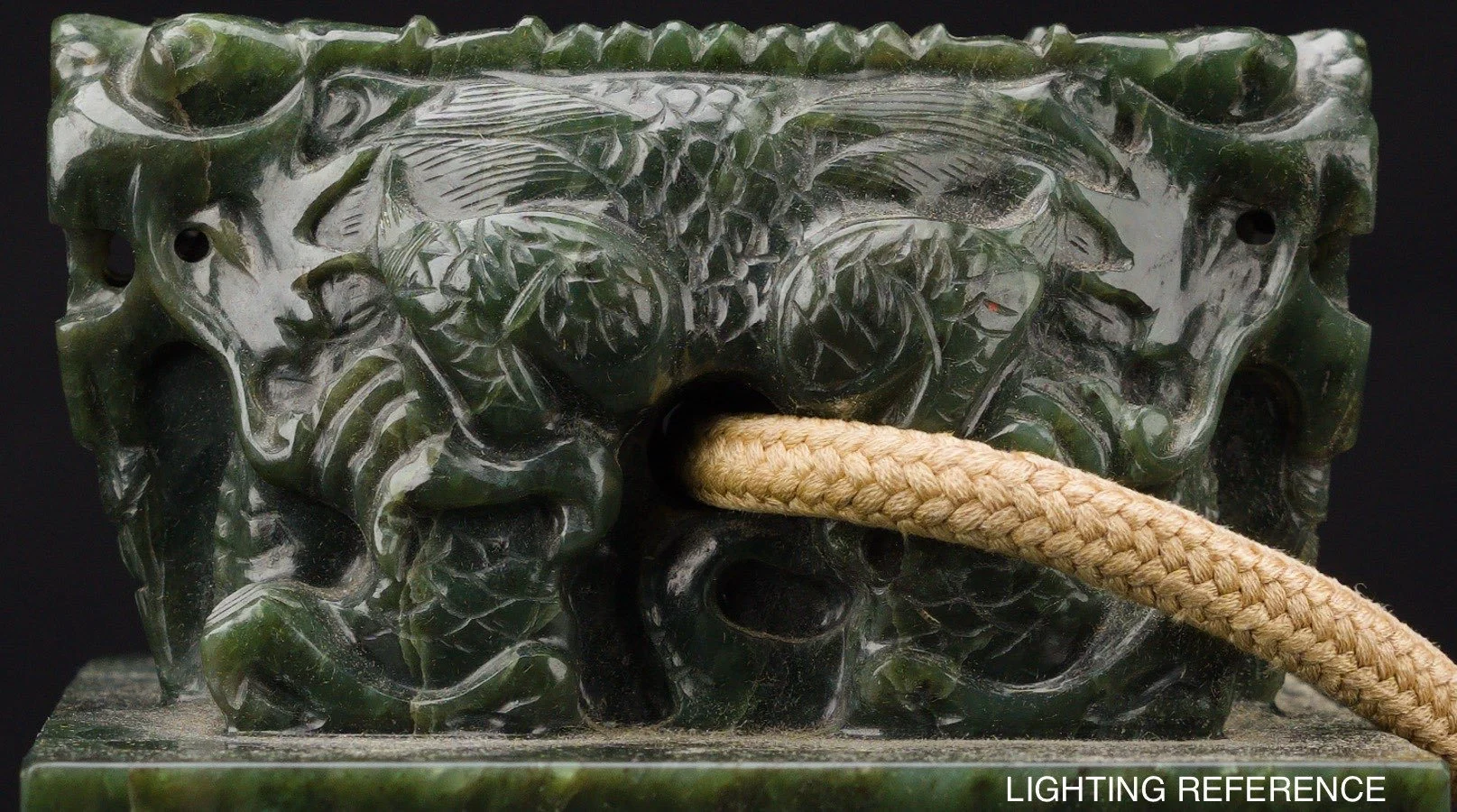
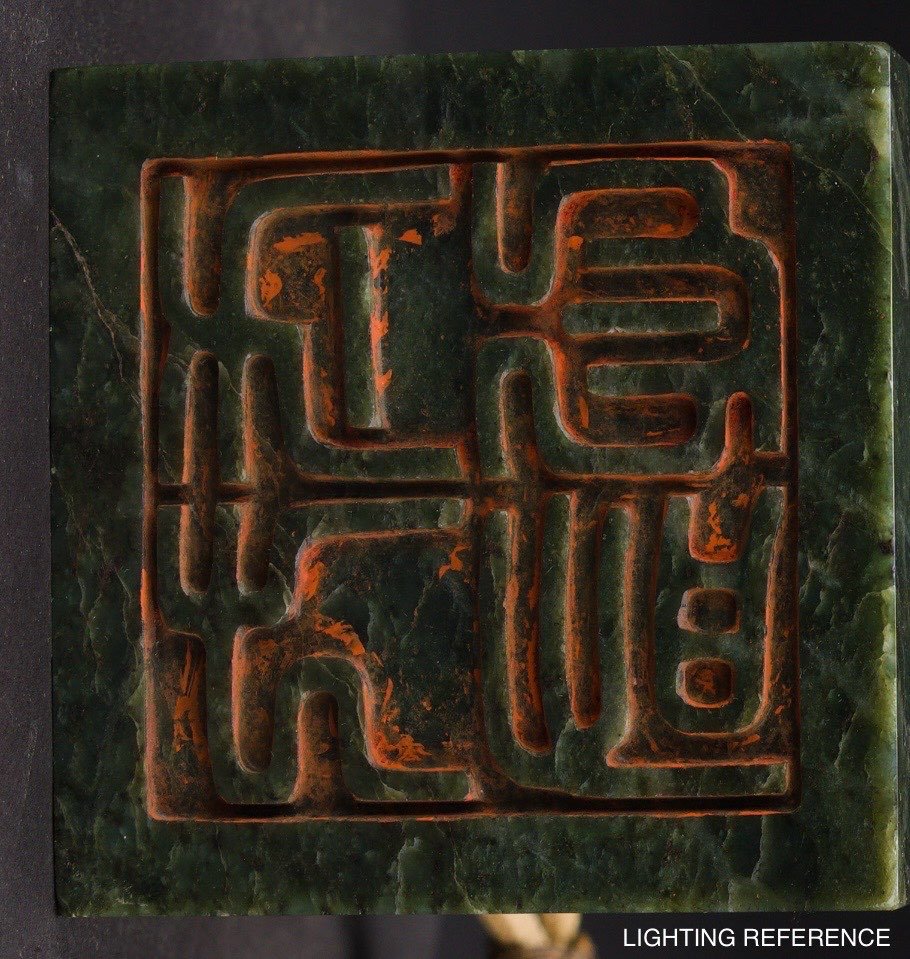
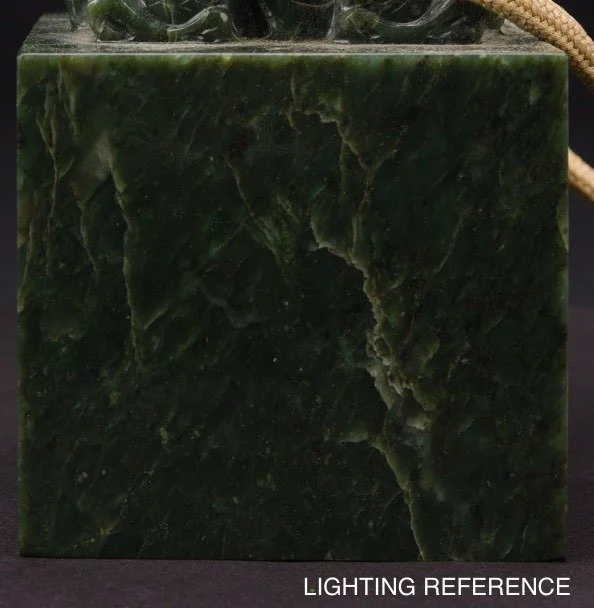
recaptured lighting reference of buddha and jade seal
captured close up photos for the buddha and jade seal
processed the newly captured close up photos for buddha and jade seal - white balanced and color calibrated
03/03/26:
processed new closeup shots of jade seal captured
enhanced the mask of the tassel and rotoed details of the seal picked up by the keyer in the process suh as the bottom imprint stamp and the seal’s jade nephrite textures
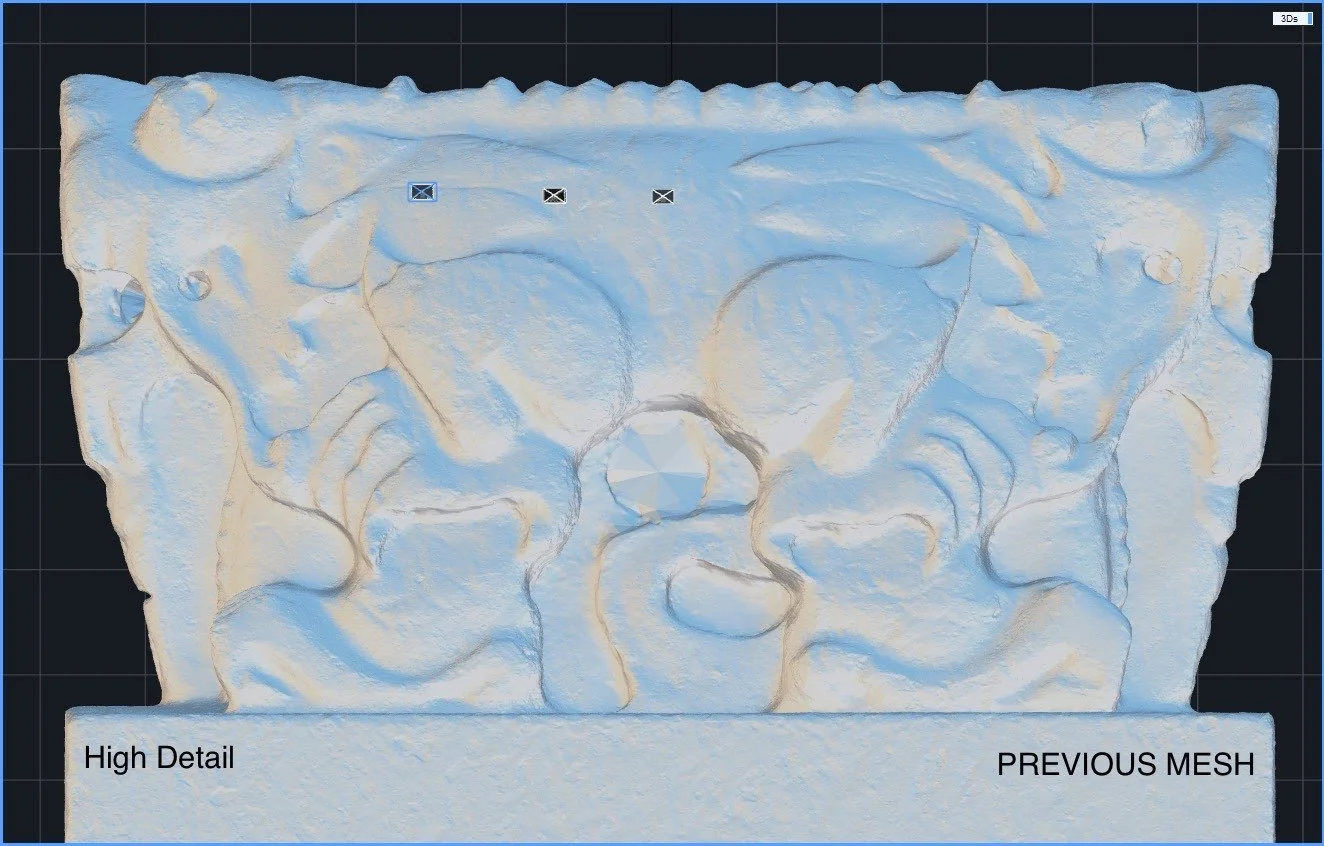
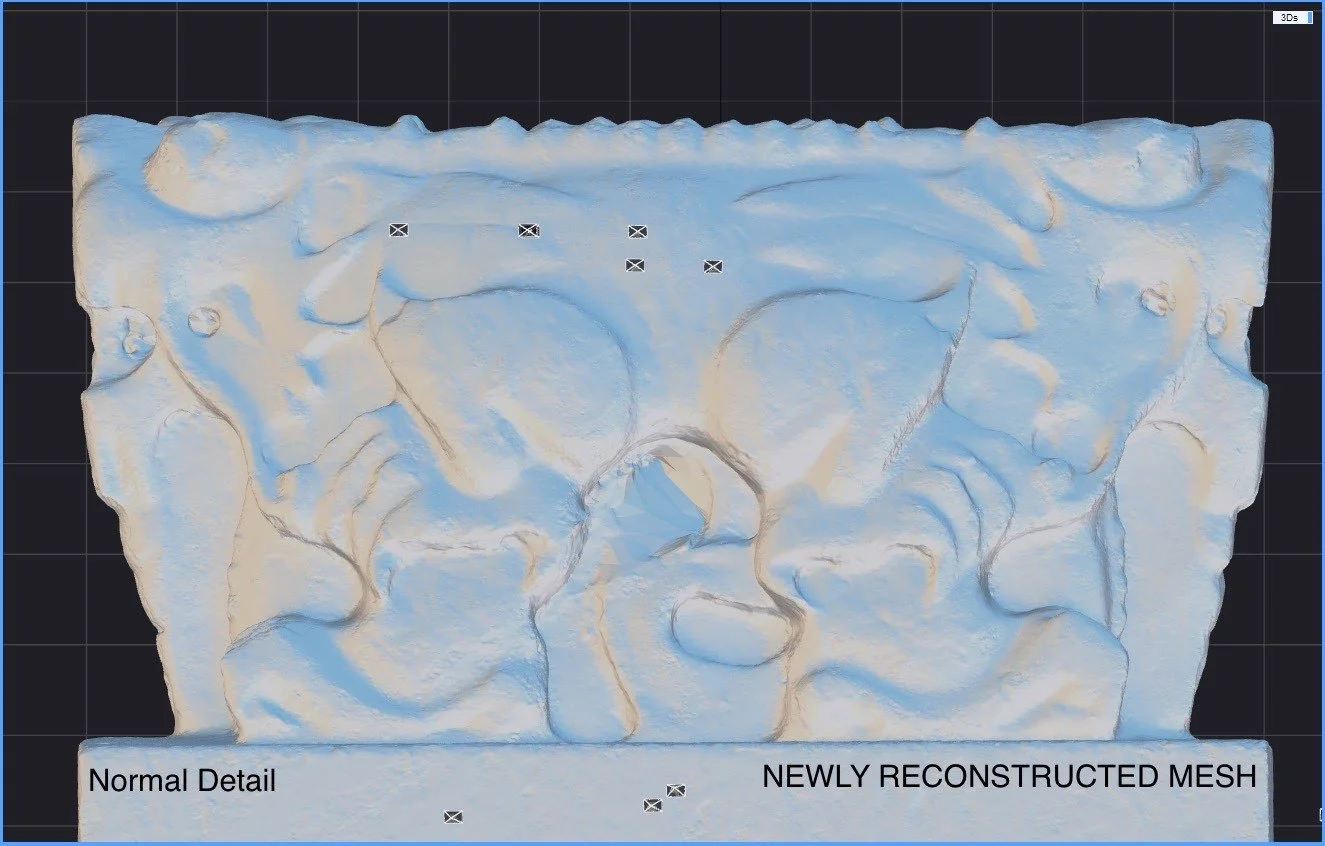
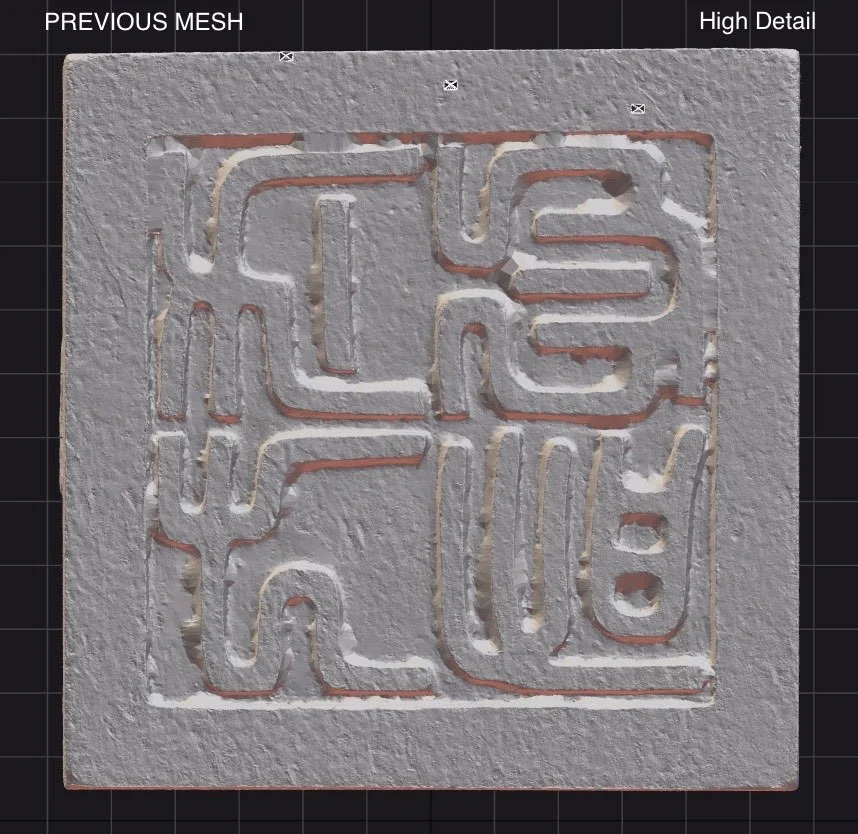
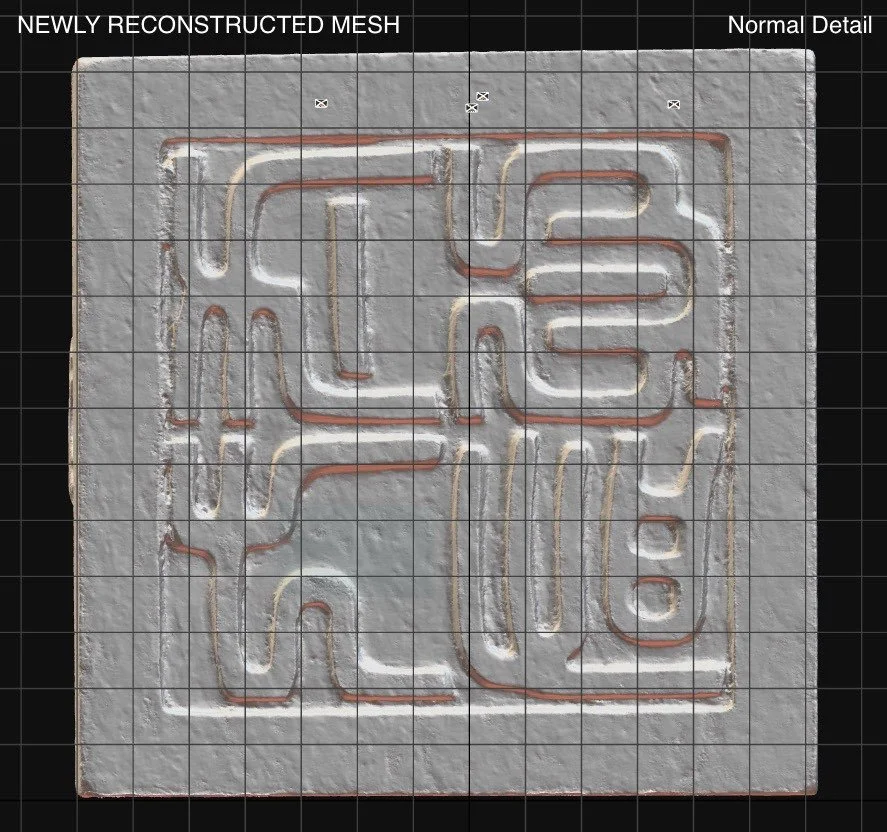
reconstructed the mesh with the newly processed scan images - compared with the previous mesh
core findings are below
Stand-Up Update - 03/03/26
What I Did on 03/02/26
-----------------------------
- Got closeup photos for the buddha and retook lighting reference and HDRI photos with Macbeth chart for both the buddha and Jade Seal.
- Processed photos for Buddha and JadeSeal
- Reviewed scans for Jade seal regarding a scanning concern with the flash reflecting on the surface of the seal, which is resolved
What I'm working on:
-----------------------------
- Need to complete the exports of the processed images
- Reconstruct Jade Seal with some of the photos some yesterday's scan session
- Clean the master of the Jade Seal based the reconstructed mesh results
Any Blockers or Challenges:
------------------------------
- Syncing issues with Box, but got it fixed early this morning. Will get up to speed with the tasks
Additional Notes or Updates:
------------------------------
- N/A
gemini and maybe chatgpt blog data and notes documentation of work done in this sprint week
Based on the conversation between Joanna, Nelson, and Travis, here is a summary of the findings regarding the mesh reconstruction of the seal.
Core Findings: Mesh Comparison
The team concluded that the new reconstruction is lower quality than the previous version, despite the addition of new close-up shots.
The "Shallow Focus" Issue
The Problem: The additional close-up images introduced shallow depth of field (DoF). While the center of these images is sharp, the edges are blurred.
The Impact: Reality Scan’s "normal detail" calculation struggled with these out-of-focus areas, leading to worse mesh definition and more noise compared to the original scan.
Technical Constraint: Despite using an f/16 aperture, the team believes they hit the minimum focusing distance limit. At such close proximity, the DoF shrinks dramatically, causing sharpness to fall off on the sides of the object or as it rotates to steeper angles.
Specific Improvements
The Bottom Imprint: While the body mesh suffered, rotoscoping (rotoing) successfully improved the definition of the indents and reduced noise on the bottom seal imprint.
Session Data: It was noted that "Session 01" contained a majority of the sharpness issues, while "Session 02" (the full session from today) provided more data but still suffered from the same blur issues at 0-degree and 45-degree orbits.
Proposed Solutions & Next Steps
The team has identified three primary paths to fix the mesh quality:
Selective Culling: Joanna and Nelson agreed to manually hide/omit the blurry images from the reconstruction process rather than deleting entire orbits.
Angle Optimization: Nelson suggested focusing on the top-down angles (which seem sharper, especially on the dragon scales) and potentially omitting the 0-degree orbit if culling individual images isn't enough.
Hardware Change: If culling fails, the team will switch to a dedicated macro lens (currently in the camera bag) designed specifically for close-up sharpness and better handling of short-range depth of field.
what does this mean:
In the context of 3D scanning and photogrammetry (using Reality Scan), this observation by Joanna points to a specific discrepancy between the physical object and the digital model.
Here is a breakdown of what that statement means in technical and practical terms:
1. The "Lighting Reference" vs. The Mesh
When she mentions the "lighting reference," she is referring to high-quality reference photos (often taken with neutral, flat lighting) that show what the object actually looks like.
The Reality: The physical body of the seal is flat and smooth.
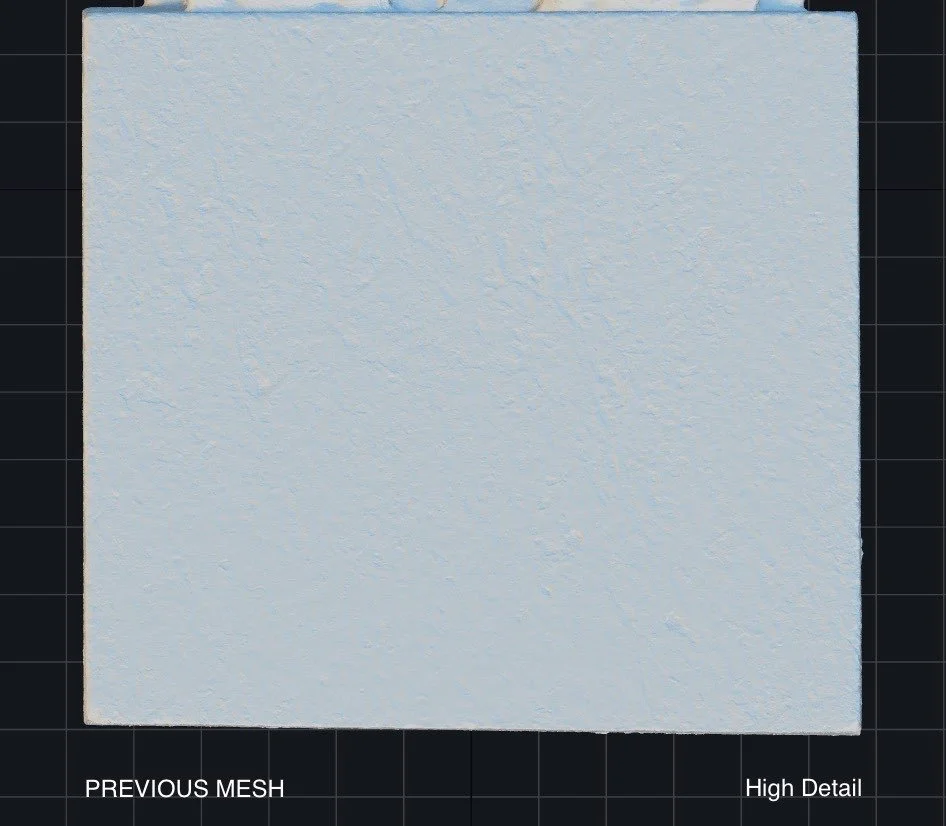
The Problem: The "new reconstruction" is likely showing unintended texture, noise, or "lumps" on the surface of the seal's body that shouldn't be there.
2. Why the "New Reconstruction" Changed
She is puzzled because the previous version might have captured the flat surface correctly, but the new version (which includes the blurry close-ups) has introduced artifacts.
Noise from Blur: As discussed in the chat, the shallow focus (blurry edges) in the new photos confuses the software. When the software can't find sharp "features" to track, it guesses the depth, often resulting in a "noisy" or "bumpy" surface instead of a perfectly flat one.
Algorithmic Error: Adding more data isn't always better; if the new images are lower quality (blurry), they "pollute" the clean data from the first session.
3. "Easier to Smooth"
Joanna is offering a silver lining for the post-processing phase:
Because the shape of the seal's body is not complex (it’s a simple geometric flat surface, unlike the intricate dragon on top), a 3D artist can easily use a "Smooth" brush or a flattening tool in software like ZBrush or Blender to fix the mesh manually.
She is essentially saying: "The software messed up a simple area, but since it's just a flat surface, we can fix it quickly in post-production without needing a perfect scan of that specific part."
Summary of the Issue
The new scan introduced surface noise on a part of the object that is supposed to be perfectly smooth. While she isn't sure exactly which image caused the "regression" (the move from a good mesh to a worse one), she isn't overly worried because a flat surface is the easiest type of error to manually repair.
03/04/26:
based on findings, culling out the blurry images that lack end-to-end sharpness and running reconstruction
further actions to be taken based on the results
before that check images and see if textures are okay and red ring from flash doesnt appear after the new mask rotoing
if mesh improves, export a new garbage matte for the mask comp for more cleaner mesh formation
Objective
Improve Jade Seal reconstruction quality through additional image capture, mask refinement, and reconstruction testing.
I. Additional Image Capture and Processing
Recapture Lighting References
Captured updated lighting reference images for both the Buddha and Jade Seal, including Macbeth chart and HDRI.
Capture Close-Up Images
Captured additional close-up images to improve detail coverage on both assets.
Process New Images
White balanced and color calibrated the newly captured images in RawTherapee.
II. Mask Refinement in Nuke
Enhance Tassel Mask and Rotoscoping
Manually refined the tassel mask by rotoscoping and keying artifacts that were incorrectly included by the keyer on a per-frame basis, including:
Bottom imprint stamp
Surface regions of the jade material
This improved separation from the seal geometry, particularly across the nephrite texture gradation and the base imprint of the seal. This ensured cleaner isolation of the seal geometry.
III. Reconstruction Iteration in RealityScan
Reconstruction with New Data
Reconstructed the Jade Seal mesh using the newly processed close-up images and compared results against the previous iteration.
Mask and Data Refinement
Refined tassel masks through additional roto work
Cleaned up unwanted regions including the bottom imprint and surface noise areas
Verified mask accuracy before reconstruction
Image Quality Assessment and Reconstruction Testing
Reviewed scans to address flash reflection issues on the seal surface (resolved)
Identified shallow focus in close-up images
Noted that Session 01 contained most sharpness issues
Session 02 provided more coverage but still had blur at 0° and 45° orbits
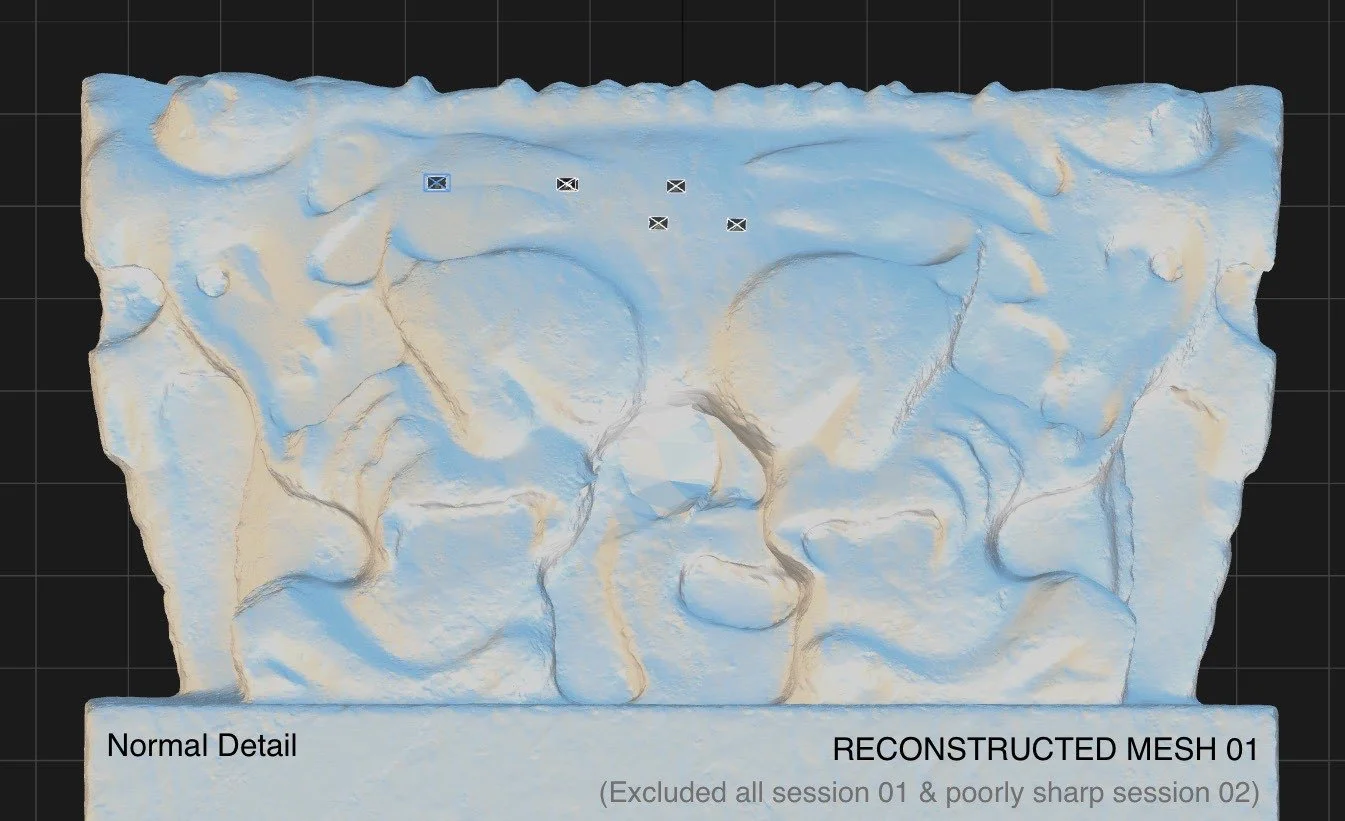
Culled blurry images lacking full sharpness
Re-ran reconstruction with filtered image set iterations
Checked textures and ensured flash artifacts (red ring) were not present in texture unwrapped after mask refinements were updated
Prepared to export new garbage mattes if results improved
Latest Iterations
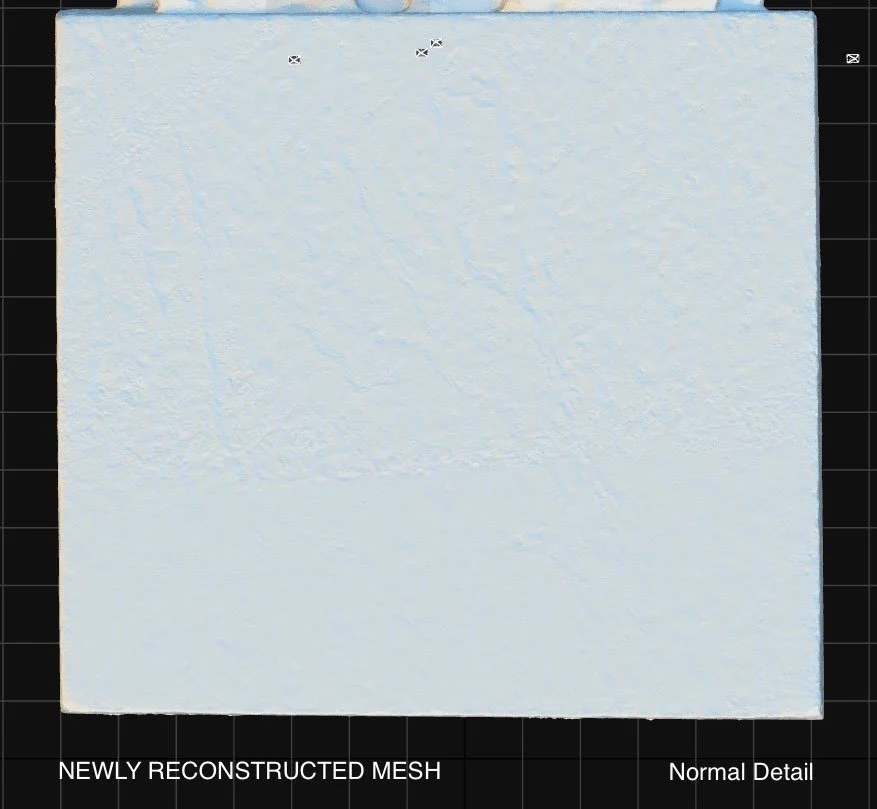
Version 05: Reconstruction with previously captured and all newly captured and processed scan data
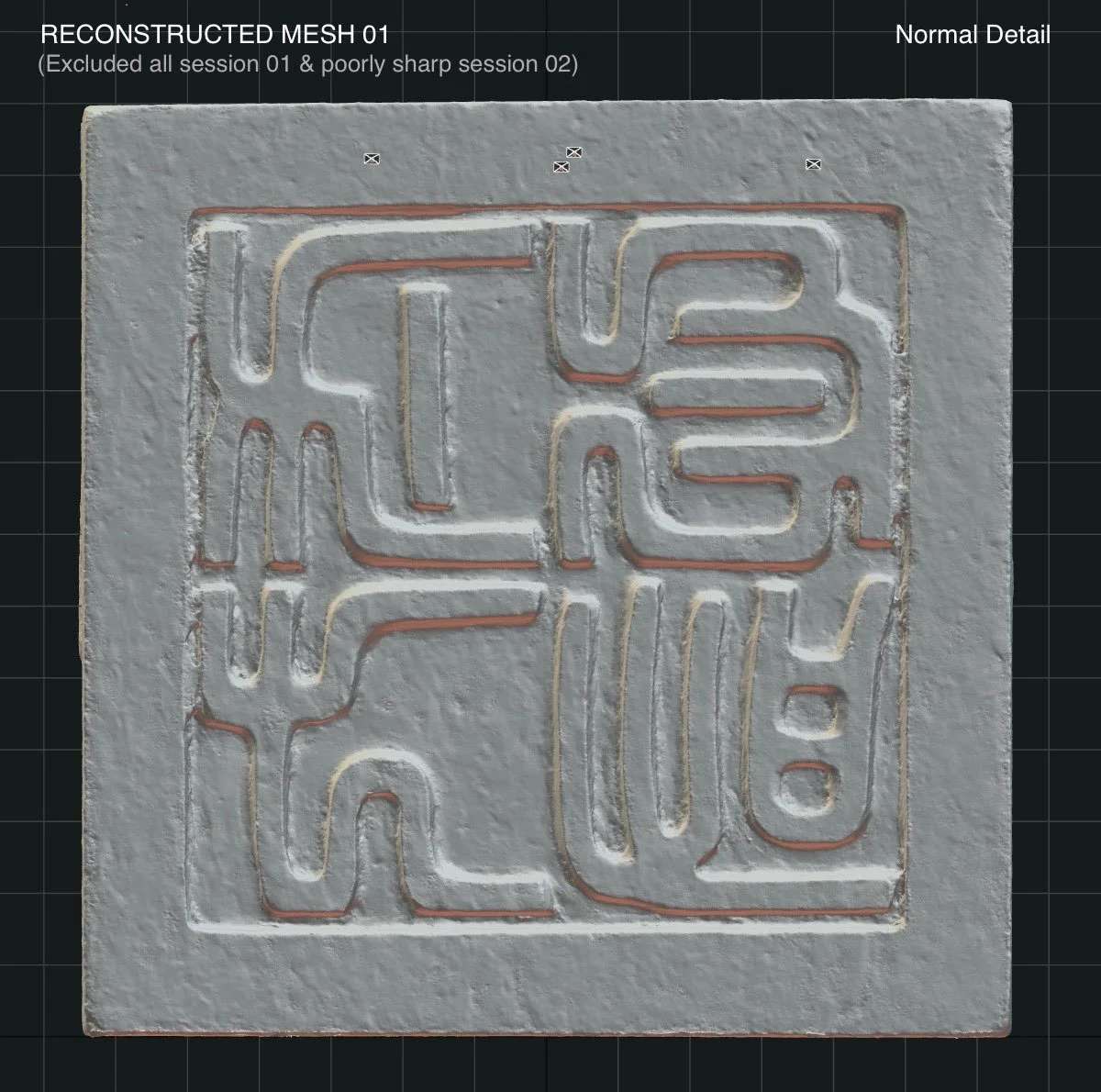
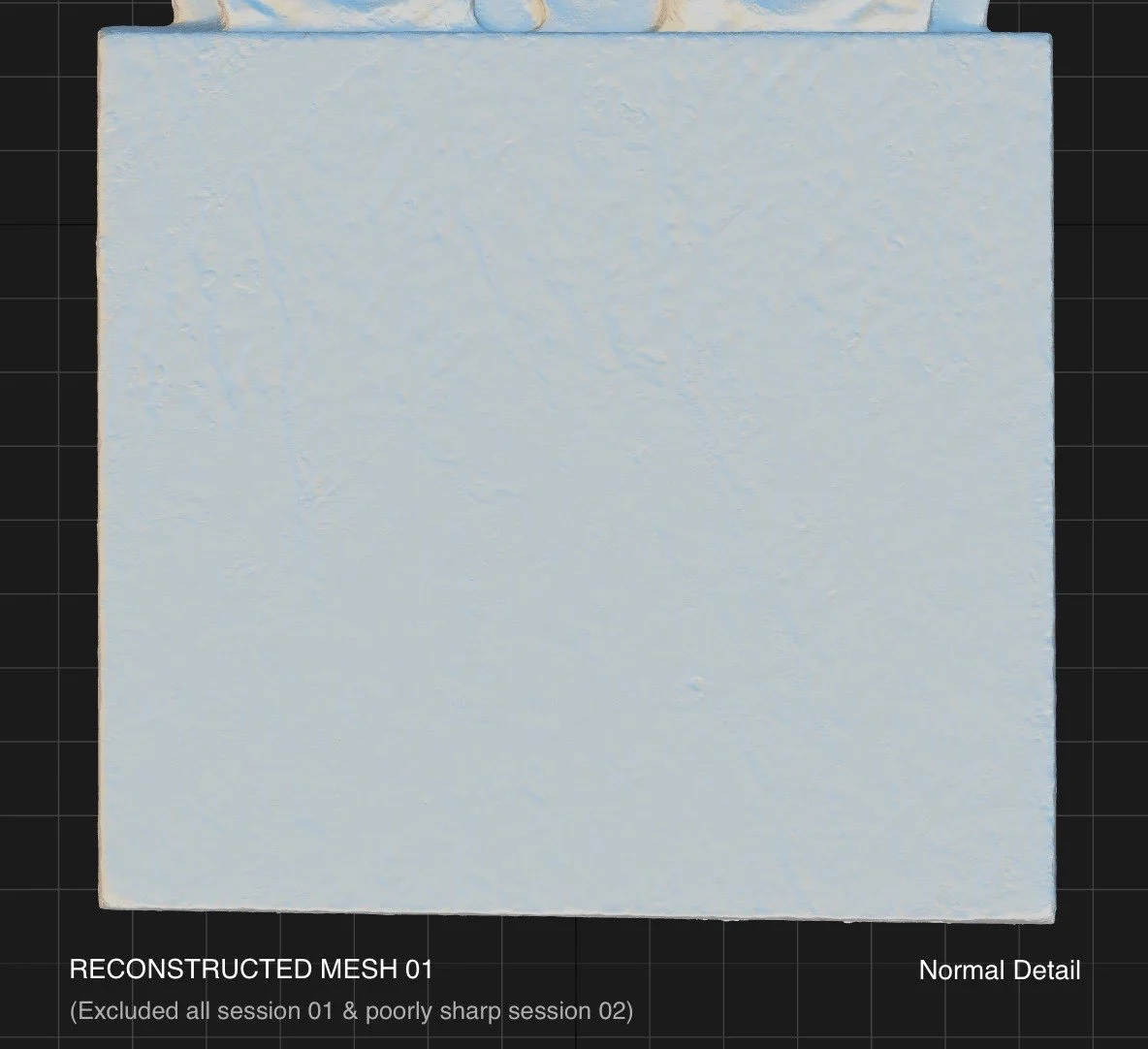
Version 05_1: Reconstruction with previously captured and some newly captured and processed scan data (excluding the poor edge-to-edge sharpness from newly captured set)
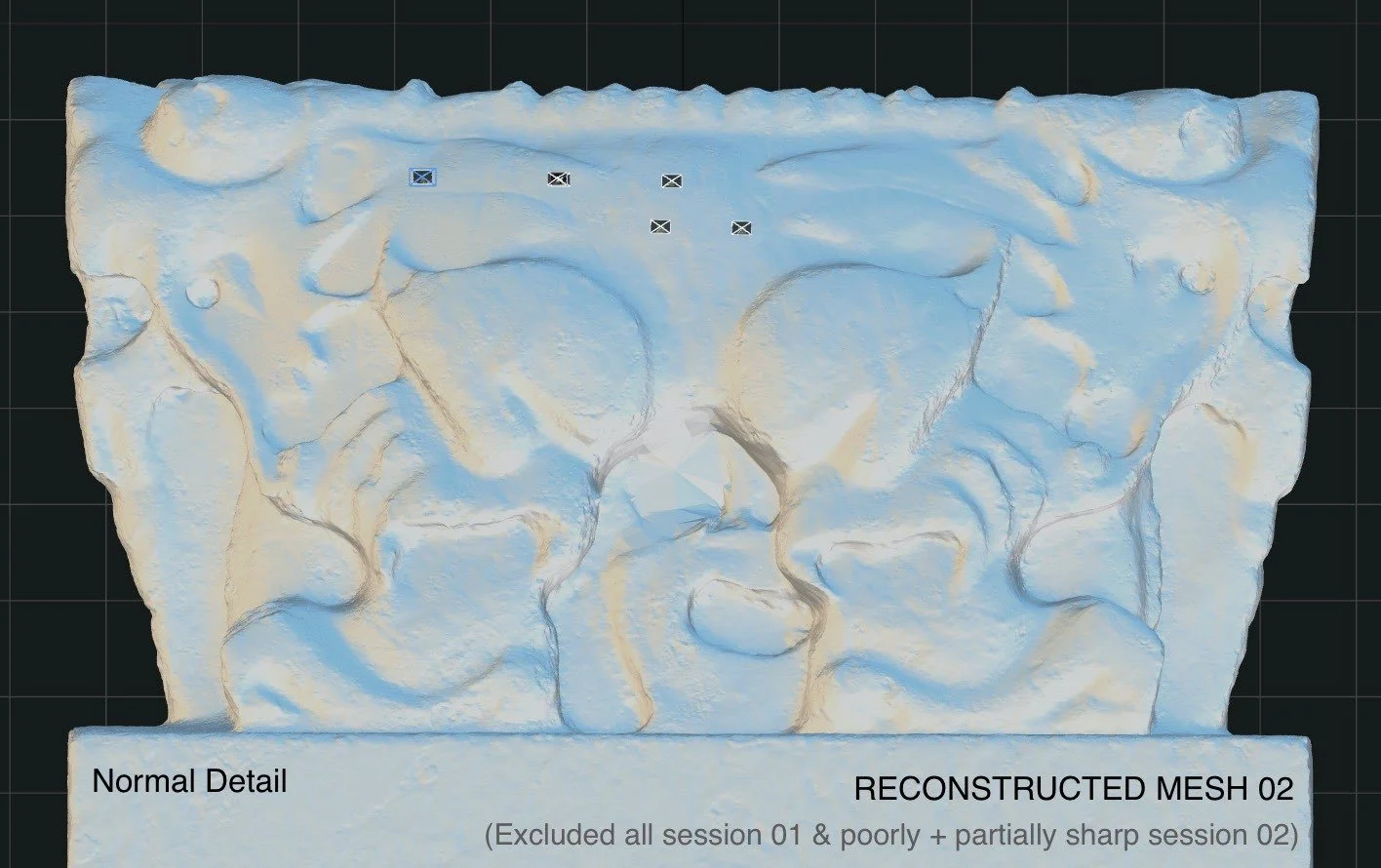
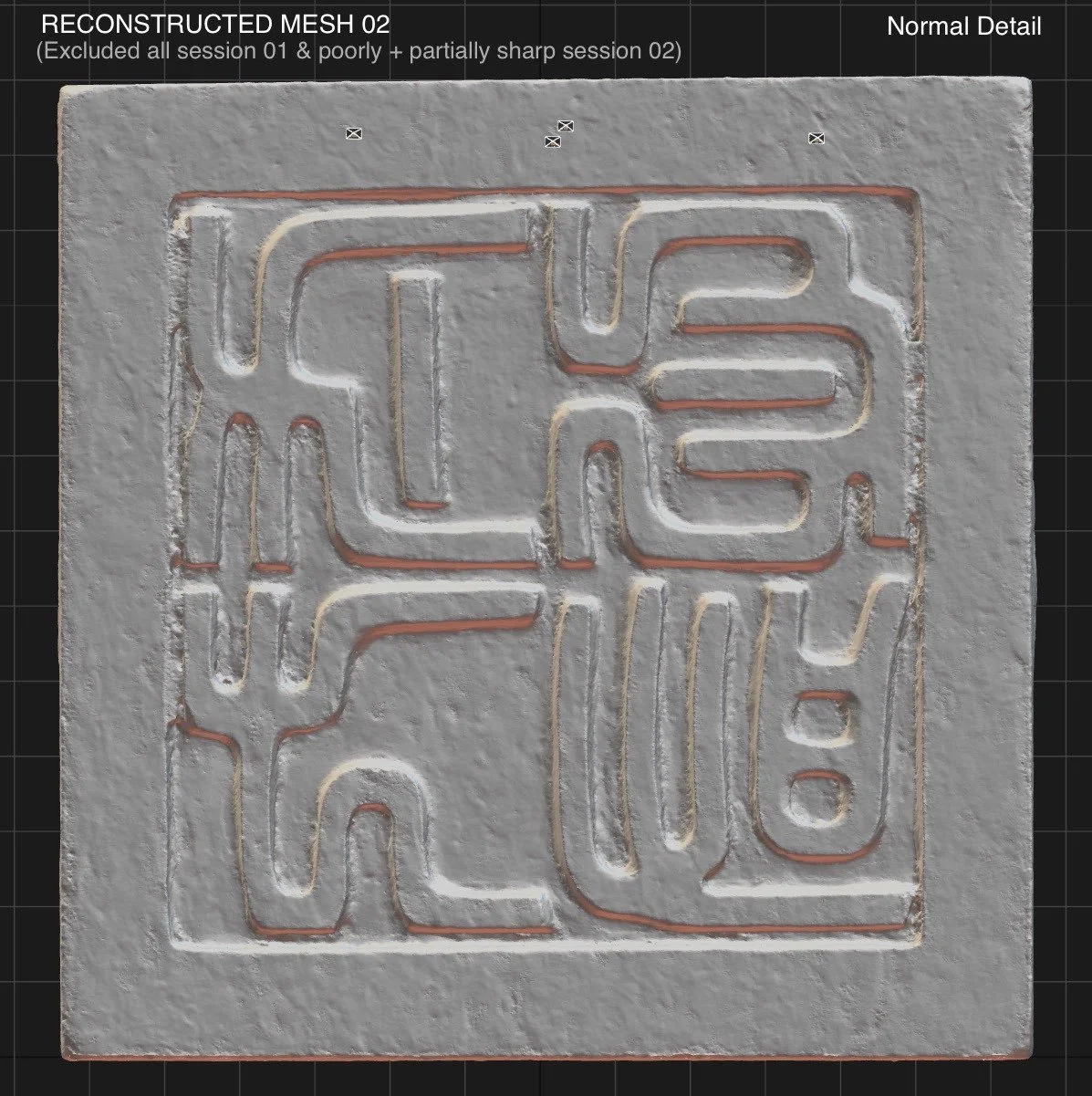
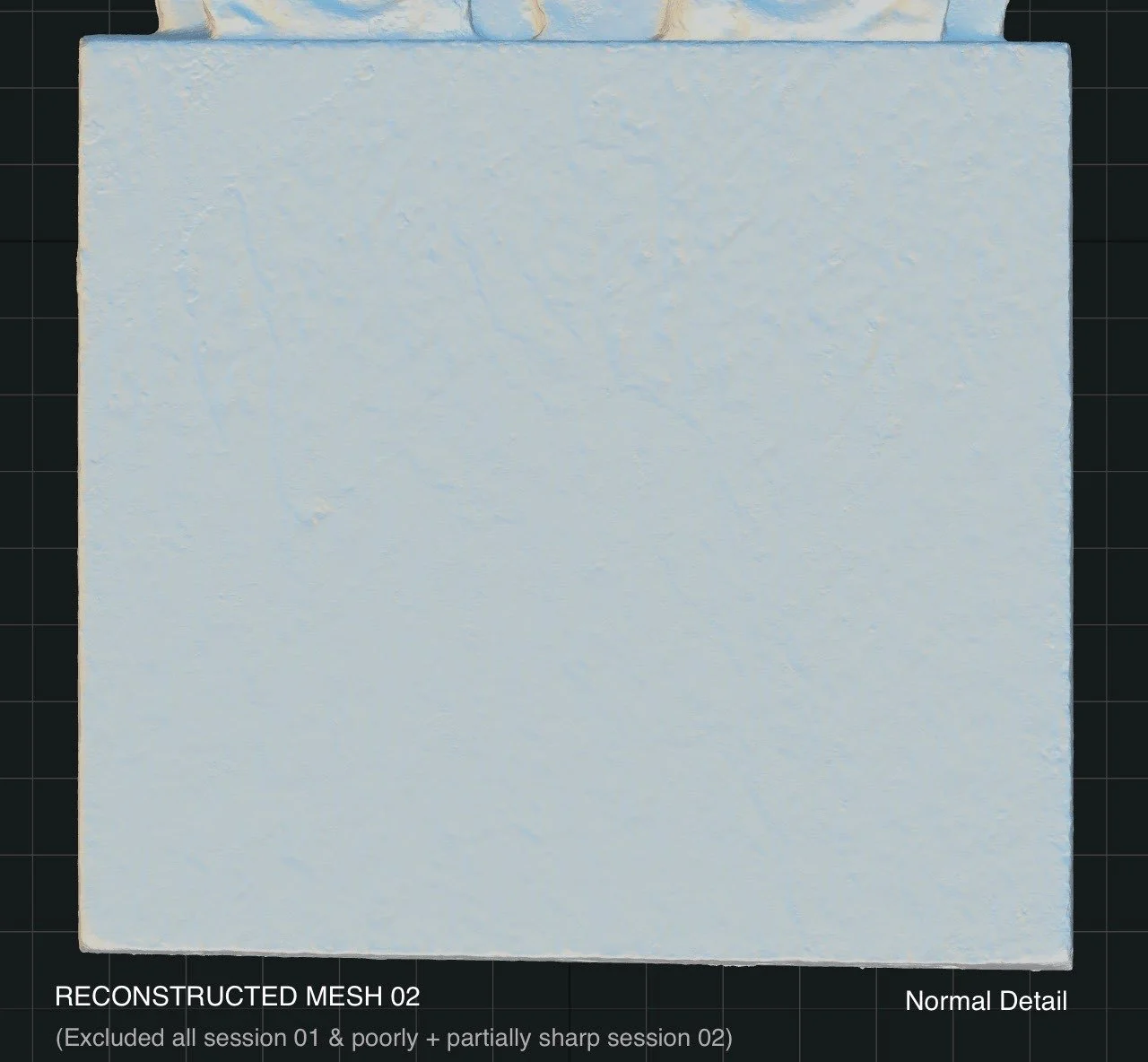
Version 05_2: Reconstruction with previously captured and few newly captured and processed scan data (excluding the partially and completely poor edge-to-edge sharpness from newly captured set)
IV. Findings and Analysis
Impact of Close-Up Images: Shallow Depth of Field Issue
Addition of close-up images introduced shallow depth of field. While the center remained sharp, edges were blurred, which affected feature detection and mesh quality. At close distances, depth of field became limited even at f/16 on 50mm lens, causing sharpness falloff across the object. Cross-polarized (XPOL) images continued to provide the most stable and accurate geometry. Parallel-polarized (PPOL) and close-up variations introduced inconsistencies.
Image Quality vs Reconstruction Quality
The new reconstruction was lower quality than the previous version despite additional images. Blurry images introduced noise and reduced surface definition. Increasing image count did not improve results when image quality was inconsistent.
Masking Improvements and Surface Quality
Roto refinement masked improved detail on the bottom imprint and reduced noise in that region but did not fully compensate for poor image sharpness.
Flat areas of the seal body showed unintended noise in the new reconstruction. These areas are simple to smooth in post-processing if needed as these are normal and minor artifacts.
Iteration Strategy Validation
Prioritizing selective image culling over the removal of entire orbits—while optimizing camera angles by pruning problematic sequences—proved most effective for enhancing reconstruction quality moving forward.
Result
Identified shallow depth of field as the primary cause of reconstruction degradation. Established selective image culling still could not produce results as stable as version 2 but the mask refinements did have an effect in improving the mesh quality in subsequent iterations. Concluded that version 2 with the new mask refined iteration would produce the best results in terms of mesh surface quality in the reconstruction process.